
Articolo: Passport Wallet for Travel: 6 Checks Before You Buy
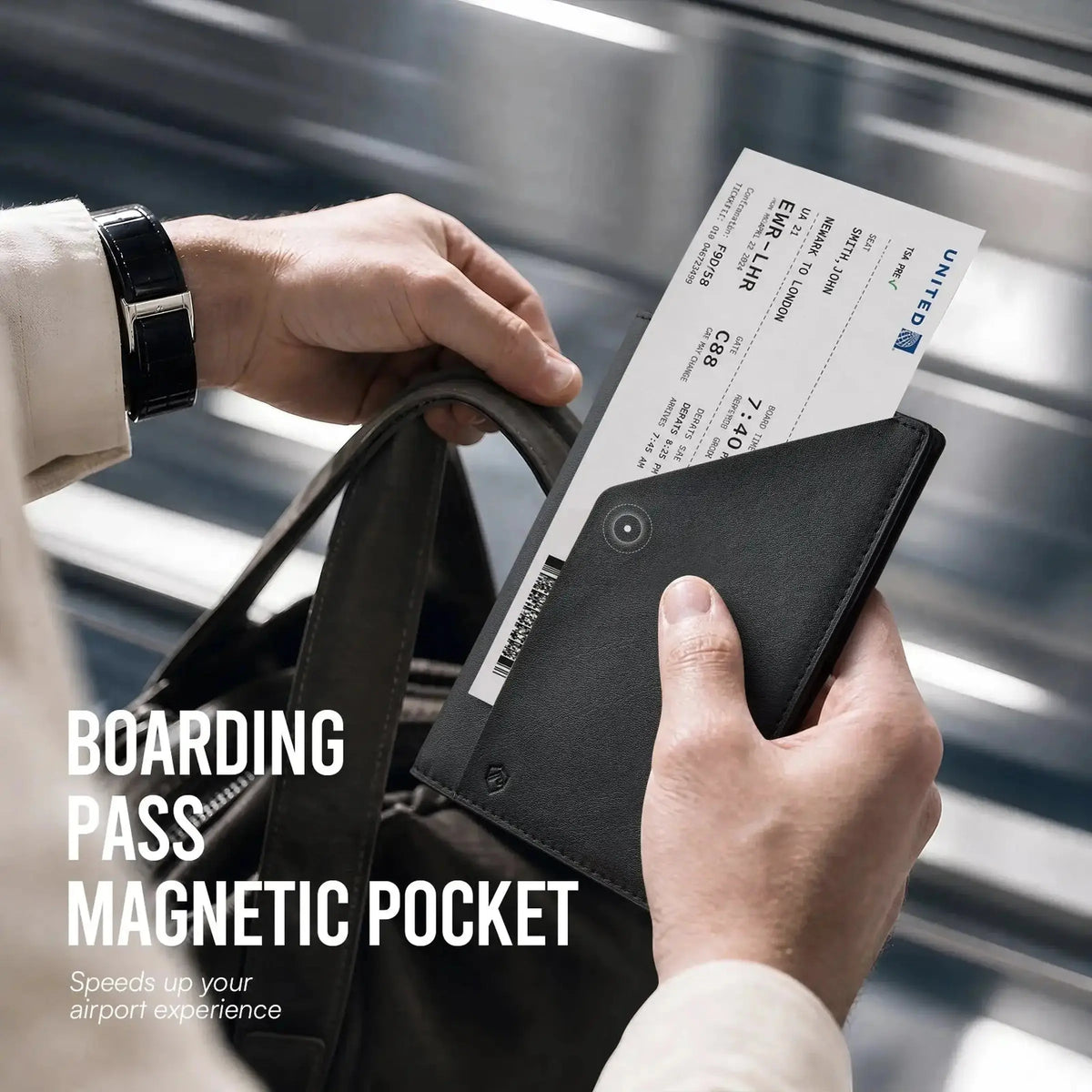
Passport Wallet for Travel: 6 Checks Before You Buy
A good passport wallet for travel should make the important things easier to find—not turn airport security into a scavenger hunt. The right choice depends less on how many pockets it has and more on how you actually move through a trip: checking in, showing identification, paying for a train ticket, and switching between currencies.
If you carry only a passport and one card, a simple passport holder may be enough. If you also need boarding documents, payment cards, a backup SIM, and small change, a travel wallet can earn its space in your bag. Here's how to decide before buying.
Passport Holder vs. Passport Wallet: What's the Difference?
A passport holder usually protects one passport and may add a card slot or two. A passport wallet is designed to organize a passport alongside other travel essentials, although the amount of extra storage varies widely by model. A family document organizer is a different category again: it's larger, and intended to carry several travelers' documents in one place.
| Type | Best fit | Trade-off |
|---|---|---|
| Simple passport holder | One passport, minimal extras | Less room for cash or travel documents |
| Passport wallet | Passport plus cards, tickets and small essentials | Can become bulky when fully loaded |
| Family organizer | Multiple people and paper documents | Larger and easier to overpack |
Quick answer: For a solo traveler who wants everything in one place, a passport wallet is often the useful middle ground. But if you prefer to keep valuables in separate places, a slim passport holder plus a small everyday wallet may be the more practical setup.

Six Checks That Matter More Than the Number of Pockets
1. Can You Remove Your Passport Quickly?
Imagine standing at a hotel reception with your carry-on in one hand. You should be able to open the wallet, identify the passport, and take it out without emptying your cards or pulling at a tight seam. Look for a dedicated passport sleeve and a layout that doesn't trap the cover under receipts.
Some checkpoints or airline staff may ask you to present the passport outside its cover. A holder that makes removal difficult can create extra friction at exactly the wrong moment.

2. Are the Documents You Use Most Often Easy to Reach?
Not everything needs the same access. Your passport and primary payment card may be needed repeatedly on travel day. Spare SIM cards, receipts, and backup cards are rarely urgent. If all of them share one crowded compartment, you lose the benefit of having an organizer.
Before choosing a travel wallet, list your frequent-access items and backup items. Prioritize the layout for the first group, not the total advertised capacity.
3. Will the Closure Still Work When It's Packed?
A magnetic closure can be convenient, but no closure should be evaluated only when the wallet is empty. Add your real travel items and check whether the edges still align and the wallet stays shut during ordinary handling. This is a suggested pre-trip check, not a claim that any particular wallet has passed it.
If you carry thick documents, folded notes, or several passports, allow extra room rather than packing every sleeve to its limit.
4. Do You Actually Need a Coin Pocket?
Loose change can be useful on trips involving cash fares, lockers, vending machines, or countries where coins are frequently used. A small zipped coin compartment may prevent coins from mixing with cards or falling out when the wallet opens.
But coin storage comes with a trade-off: even a few coins increase weight and make a wallet less flat. If you almost never handle coins, don't choose a larger design for a feature you won't use.

5. Does It Fit the Bag or Pocket You Actually Use?
A passport wallet isn't automatically a front-pocket wallet. Check the published closed dimensions against the actual pocket or bag compartment where you'll store it. Then repeat the check after loading it. Don't use the empty-product thickness as a promise of the loaded thickness.
For frequent airport travel, a secure inside-jacket pocket or zipped personal-item compartment is often more practical than trying to squeeze a passport and all your cards into a tight pants pocket.
6. Are Security Features Described Precisely?
Some travel wallets advertise RFID-blocking construction. That may be useful for particular contactless credentials, but RFID protection is not the same thing as theft-proof storage, GPS tracking, or protection against losing the wallet. Look for clear product-specific testing details before treating a broad shielding claim as independently verified.
Physical habits still matter: keep your passport accessible to you but not exposed in an open bag, and don't assume that one wallet feature replaces careful document handling. The U.S. Department of State also advises travelers to protect passports from damage, including moisture-related damage. See its passport care guidance.
A Practical Example: The SLIMWALT Passport Wallet
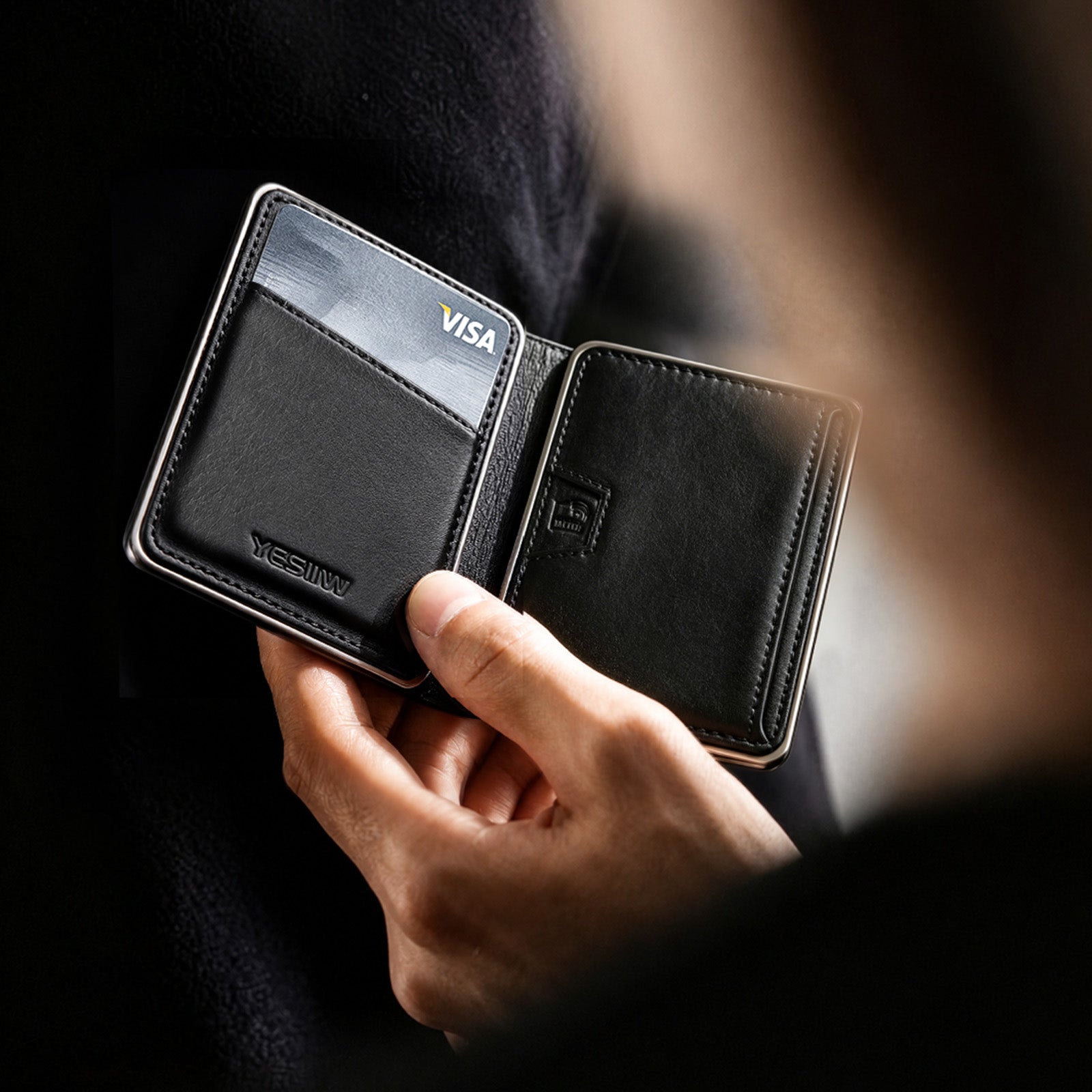
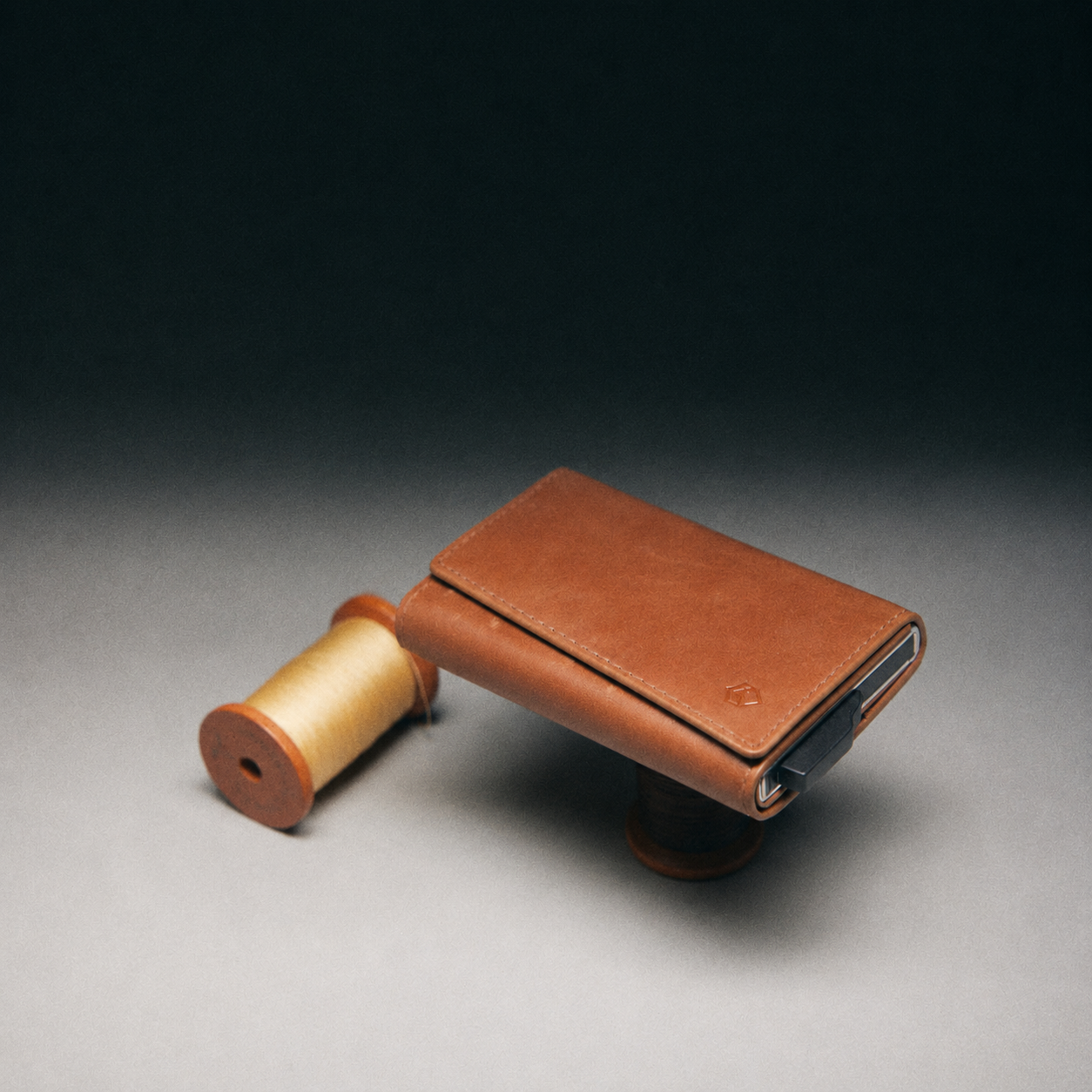
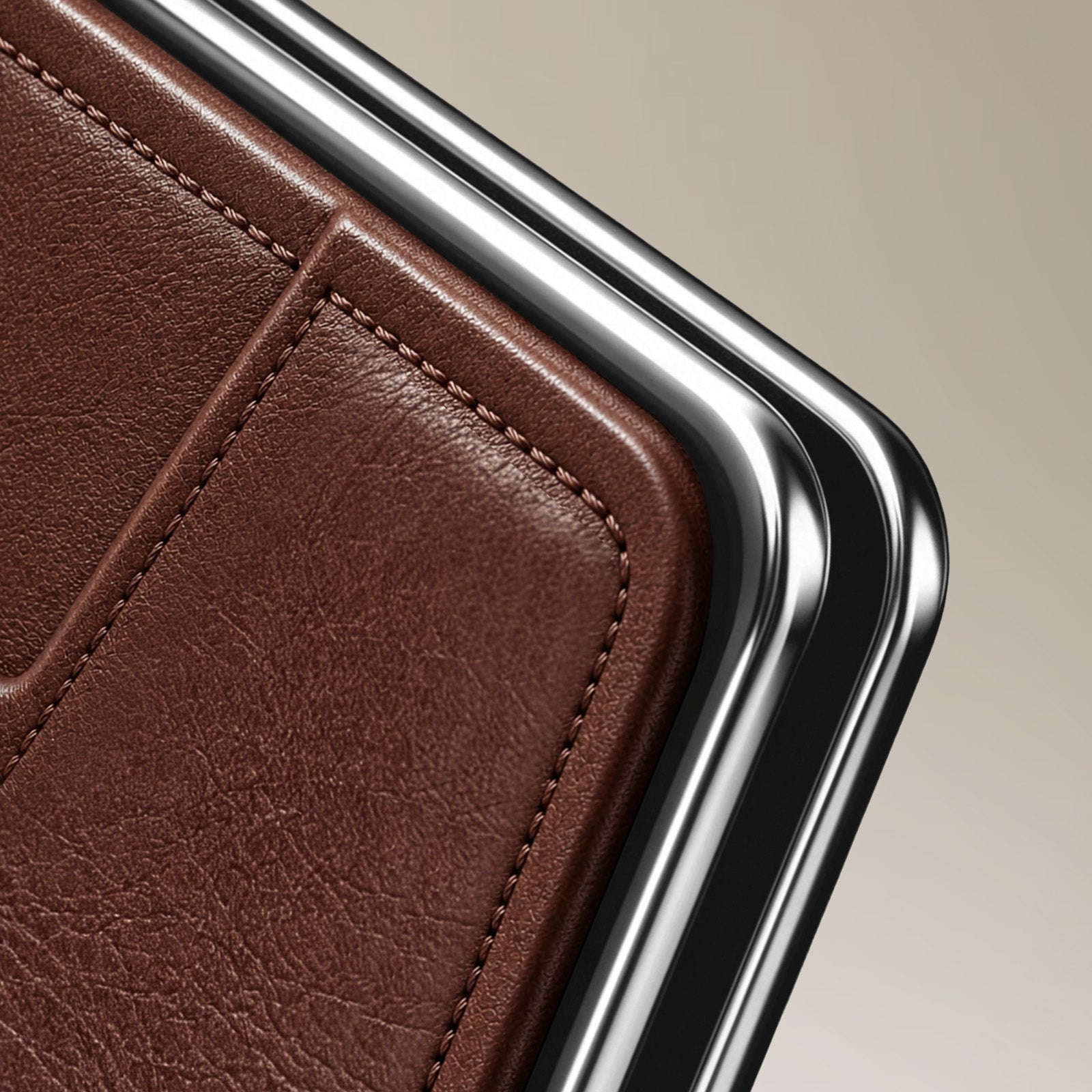
To make these checks concrete, consider the SLIMWALT Passport Wallet. The product listing describes a vegan-leather bifold design with a magnetic closure, passport sleeves, payment-card and ID storage, spaces for SIM cards and travel documents, and a zipped coin pocket.
According to the current product page, its listed size is 15.5 × 10 × 1.5 cm (approximately 6.1 × 3.9 × 0.6 inches), with a listed weight of 118 g (approximately 4.2 oz). The listing advertises room for up to three passports, three payment cards, one ID card, two SIM cards, and small travel extras. These are manufacturer-listed specifications, not measurements from an independent hands-on test.
One published customer review on that same product page reports that two passports felt comfortable to carry, while three would not be the reviewer's preferred load. That's useful context—not a universal capacity result. Your own passports, inserts, and other items can change how the wallet closes and feels.

Who Might Like This Layout?
- Solo international travelers: one passport, a primary card, an ID and travel paperwork in one place.
- Travelers managing two passports: worth considering, provided the loaded wallet still closes comfortably.
- People who swap SIM cards or handle cash: separate small-item storage can help with organization.
Who Should Consider Something Else?
- Ultra-light travelers: a plain passport sleeve may take less space if you carry no other documents.
- Families managing several travelers: a larger travel-document organizer may be easier to manage.
- Travelers who want a fully zippered outer closure: the listed SLIMWALT design uses a magnetic bifold closure and a separate zipped coin compartment; those are not the same thing.
See the SLIMWALT Passport Wallet's current specifications and photos before making your decision.
The Airport Handoff Drill: Test Your Setup Before You Fly
You don't need to wait until the airport to find out whether a new wallet works for you. Try this simple dry run with the items you actually plan to carry:
- Pack your real load: your passport, ID, primary card, backup card, boarding pass or itinerary, plus the cash or coins you expect to use.
- Find the passport: open the wallet and remove it with one hand, without moving loose cards out of the way.
- Find your payment card: put the passport away, then retrieve the card you use most.
- Close and carry: check that the wallet shuts properly and fits your intended pocket or zipped bag compartment.
- Remove unnecessary items: if the process feels crowded, move rarely used receipts or backups elsewhere.
Do the drill at home. It is a practical decision aid, not a laboratory performance test or a guarantee about airport procedures.

What Should You Put in a Passport Wallet?
Start with the essentials. Then add only what your itinerary justifies.
| Priority | Suggested items | Why |
|---|---|---|
| Core | Passport, one payment card, necessary ID | Used most often during a trip |
| Trip-dependent | Paper ticket, local cash, transit card | Depends on your route and destination |
| Backup | Extra card, spare SIM, receipts | Useful occasionally, but may be stored separately |
One caution: storing every important document and payment card in a single wallet is convenient, but losing it means losing everything together. Consider keeping a backup payment method and secure copies of important travel information separately.
Final Verdict: Buy for Your Trip, Not for the Maximum Capacity
For travelers deciding between a passport holder and a passport wallet, ask one question first: Do I need to organize more than my passport? If the answer is no, keep it simple. If the answer is yes, choose a wallet with clearly separated access for the things you'll use most.
The best passport wallet for travel isn't necessarily the one with the most slots. It's the one that lets you retrieve your documents easily, closes when packed with your real essentials, and fits the way you travel. Review the SLIMWALT Passport Wallet if that organization-first approach matches your needs.

Scritto da SLIMWALT

Commenta
Questo sito è protetto da hCaptcha e applica le Norme sulla privacy e i Termini di servizio di hCaptcha.